

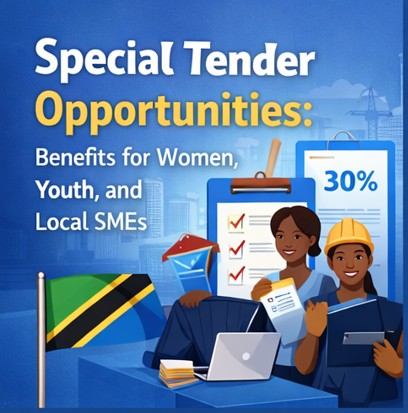
Securing government contracts in Tanzania isn’t just about competing in an open market — there are formal provisions that support priority groups such as women, youth, persons with disabilities, and elderly citizens. These initiatives are part of a broader effort to promote inclusive economic growth and empower local businesses through public procurement policies.
This guide explains how these opportunities work, the legal framework behind them, and how your business can benefit.
 1. Legal Basis for Preferential Procurement in Tanzania
Under the Public Procurement Act and associated regulations, Tanzanian law requires public procurement entities to set aside a portion of their annual procurement volume for “special groups.” These include:
Women entrepreneurs
Youth-led businesses
People with disabilities
Elderly groups
The law specifies that 30% of public procurement spending should be reserved for these groups, with individual portions allocated to each category (for example, youth, persons with disabilities, women, and the elderly).
This procurement system is designed to reduce barriers for Tanzanian SMEs that may otherwise struggle to compete on equal terms with larger firms.
2. How Procurement Policy Helps Priority Groups
The requirement to allocate up to 30% of procurement budgets to special groups creates significant market access opportunities for qualifying enterprises. Recent government figures show that:
Tenders worth billions of Tanzanian shillings have already been awarded to registered special groups through the National e-Procurement System (NeST).
The system has expanded access to tender notices and awards for local firms and priority groups nationwide.
This means that women-owned businesses, youth associations, and disability-led enterprises can compete for meaningful contracts — not just small or token opportunities — when properly registered and qualified.
3. Training and Support for Special Groups
To ensure these groups can compete effectively, the Tanzanian government and partner agencies conduct capacity-building efforts, including:
Training on public procurement processes
Tender registration and documentation support
Awareness campaigns on how to use the National e-Procurement System (NeST)
For example, training initiatives have been offered to people with visual impairments to help them understand tender processes and access opportunities just like other citizens.
Furthermore, partnerships between procurement authorities and vocational training bodies aim to increase the number of qualified groups able to participate.
4. What Businesses Need to Do to Qualify
To benefit from these preferential opportunities in Tanzania, groups must usually:
Form a registered group or association with defined membership
Register on the National e-Procurement System (NeST)
Ensure their business complies with relevant legal and procurement requirements
Becoming registered and compliant increases your chances of being invited to tender and winning contracts reserved under the preference scheme.
5. Why These Opportunities Matter for Tanzanian SMEs
For local small and medium-sized enterprises, preferential procurement provides:
Greater access to government projects that would otherwise be competitive
Opportunities to build track records and credibility
A path for community growth and employment creation
As government procurement becomes increasingly digital and inclusive, priority groups are better positioned to participate and benefit economically.